
How can schools and colleges be judged on outcomes they cannot create alone?
Schools and trusts are held accountable for preparing young people for their futures. But many of the conditions shaping those futures sit beyond the school gates.
Employers shape access to experience and opportunity. Places determine economic priorities and investment. Communities, public services and wider systems influence the circumstances in which young people learn, develop and make choices.
Education cannot control all of those things. But it can become more intentional about how it understands, connects to and influences the world around it, because that world helps shape what happens to young people next. Their destinations are not separate from education: they are part of the outcome, and increasingly part of how schools and colleges are evaluated.
The opportunity is to move beyond asking what more schools can do and start asking what becomes possible when education, employers and place take greater responsibility for opportunity together.
EDUCATION
Our Services
STARTING POINTS, NOT PACKAGES
Every organisation starts somewhere different. Our propositions bring together some of the challenges we most often help solve, but they’re not fixed packages. We can work with you on a specific question or deliverable, bring independent perspective to an existing programme, or shape a broader piece of work around the outcome you’re trying to achieve. If your challenge doesn’t fit neatly into one of these areas, talk to us.

01 Careers, Skills and Industrial Strategy
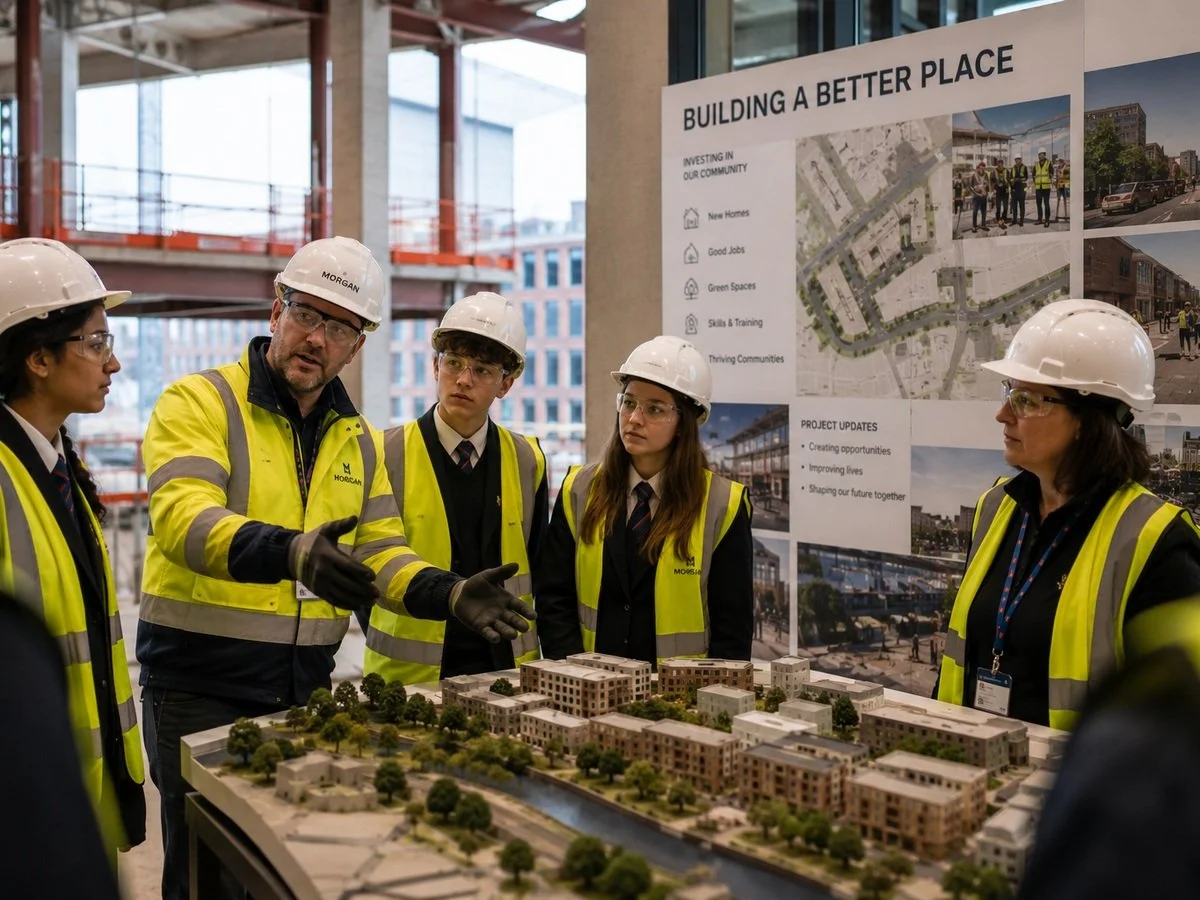
Align careers skills and employer activity so they reinforce each other and create clear pathways for learners. Second, employer and place partnerships.
02 Employer and Place Partnerships
Build purposeful partnerships with employers and place partners that align with your learners and local opportunities, focusing on depth, not just volume.
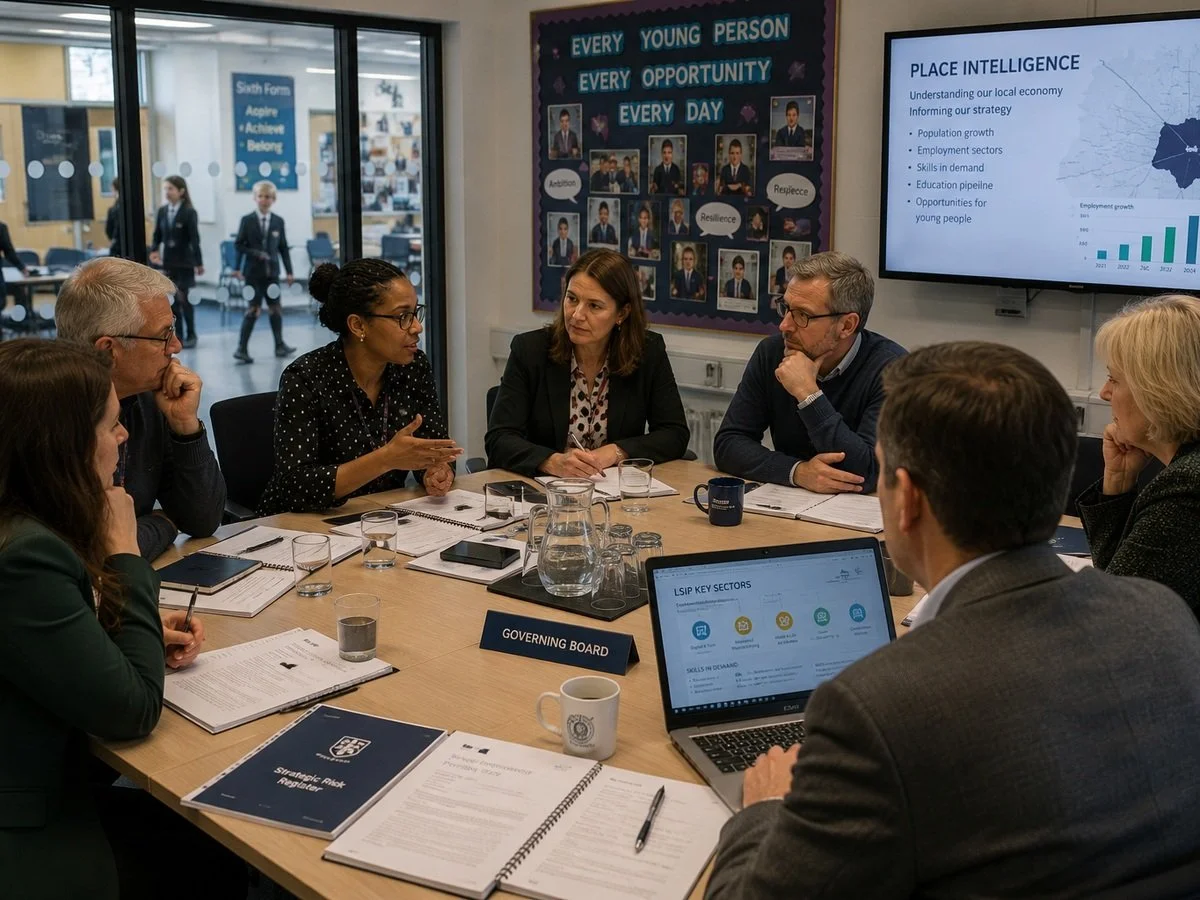
Use governance and strategic relationships to bring external insight and partnerships into your strategy, connecting employers and place.
03 Future Facing Governance
YOU DON'T NEED ANOTHER EDUCATION PERSPECTIVE.
You need someone who can bring the world beyond the school gates into clearer view, and help you do something useful with it.

I KNOW WHERE OPPORTUNITY IS EMERGING
I see what’s coming - policy, economic change, new industries, new routes into work - and translate that into opportunities your school or college could exploit.
I DO THE JOINING-UP
I take all the existing initiatives, employer activity, place priorities and national agendas competing for your attention and make them work together, rather than sitting as disconnected projects.
I KNOW WHAT MAKES EMPLOYERS TICK
I’ve worked at some of the world’s largest engineering consultancies so I know what makes organisations engage, invest and stay, and how to build partnerships that create value for both sides.



I HELP YOUR PARTNERSHIPS WORK HARDER
You may not need more employers. I help you get more value from the relationships you already have, align them to learner need and outcomes.
I ASK WHO IS MISSING OUT
I look at what your employer partners are offering and whether it reflects the skills, needs and backgrounds of your learners, spotting where different opportunities could better support their education.
I OPEN DOORS TO RESOURCES YOU DIDN’T KNOW ABOUT
I connect education leaders to government and employer resources that can be difficult to see from inside the system but will help drive performance as well as enrich your learners experience of school.




Jess is highly effective at convening diverse stakeholders - corporate partners, educators and internal teams - aligning them behind shared goals and translating strategy into practical, scalable delivery. She consistently identifies opportunities to grow and evolve programmes, demonstrating strong strategic insight, commercial awareness and a focus on long-term impact.
EMMA HARRIS Head of Partnerships and Programmes Boards for Education


01 Careers, Skills and Industrial Strategy
What opportunities are emerging in the economy, what are the routes into them, and what does that mean for our learners and strategy?
The world young people are preparing to enter is changing quickly. Industrial Strategy, Growth Sectors, technological change and major investment are reshaping where jobs will be created, the skills employers will need and the routes through which young people can access them.
At the same time, the landscape between education and employment is becoming more complex. Equalex and meaningful workplace experiences, T Levels, apprenticeships and other technical and vocational routes are changing what young people can experience and how they can progress.
Schools and trusts therefore need more than labour-market information. They need to understand what is changing around them, what is being built in response, and where their learners fit within it.
The challenge is connecting all of that intelligence - economy, pathways, experiences, choices, attainment and destinations - into a coherent strategy that connects education to opportunity.
HOW WE HELP
We help you see beyond the labour-market data to understand the wider ecosystem of opportunity taking shape around your learners.
Knowing which sectors are growing is only part of the picture. We help you understand what government, industry and places are actually building in response — from new skills initiatives and sector workforce plans to technical pathways, employer programmes, investment and emerging models of workplace experience.
We connect those developments back to your learners and strategy: identifying where there are meaningful routes into opportunity, where partnerships could create greater value, and where your school or trust could position itself more deliberately.
So rather than simply knowing where the economy is going, you can make strategic decisions about how your learners connect to it.
TOGETHER WE’LL EXPLORE
ECONOMY — Which growth sectors, investments and industrial priorities are shaping your place?
OPPORTUNITY INFRASTRUCTURE — What national, sector and place-based initiatives are being built around them?
PATHWAYS — How do T Levels, supported internships, apprenticeships and technical/vocational routes connect learners to those opportunities?
EXPERIENCE — What does Equalex and meaningful workplace experience mean for the way you work with employers?
ACCESS — Which learners are currently closest to those opportunities and who might be missing out?
STRATEGY — What should all of that mean for careers, curriculum, governance and wider trust decisions?


02 Employer and Place Partnerships
Do our employer partnerships give young people a clear line of sight to the opportunities around them?
Most schools and trusts don't have a shortage of employer engagement. They may already work with dozens of businesses, attend careers events, offer workplace experiences and receive approaches from organisations wanting to engage.
But more employers doesn't necessarily mean more opportunity.
The question is whether those relationships reflect the industries, growth sectors and pathways shaping your place; whether they connect to what your learners need; and whether each partner is contributing something distinctive enough to justify the time and effort involved.
A school could have 50 employer partners and still have significant gaps. Another might work deeply with ten organisations whose industries, opportunities, networks and capabilities give young people far greater access to the economy around them.
The opportunity is to move from collecting employer relationships to intentionally building an ecosystem around the futures your young people could access.
HOW WE HELP
We help you work backwards from opportunity.
We start with your learners, your place and the economic opportunities around them, then look at whether your existing employer and partner ecosystem provides the right connections to access them.
We help you identify where relationships are strategically valuable, where there is duplication, where important industries or pathways are missing, and what different partners are uniquely positioned to contribute.
Where new relationships are needed, we help you look beyond individual organisations to the wider infrastructure around them — employer networks, Careers Hubs, combined authorities, sector bodies and place-based partnerships — so you're connecting into ecosystems rather than continually adding names to a contact list.
The result is fewer relationships for relationship's sake, and a clearer line of sight between employer engagement and opportunity for your learners.
TOGETHER WE’LL EXPLORE
What your learners and strategy actually need from external partners
Which existing relationships are strategically valuable and where the gaps are
How to assess and prioritise incoming employer opportunities
The quality, relevance and sustainability of potential partnerships
Place, sector and stakeholder mapping
How to dock into existing Careers Hub, employer and place infrastructure
Where employer capability can address specific barriers or opportunities for learners
Partnership models that create reciprocal value for education and industry

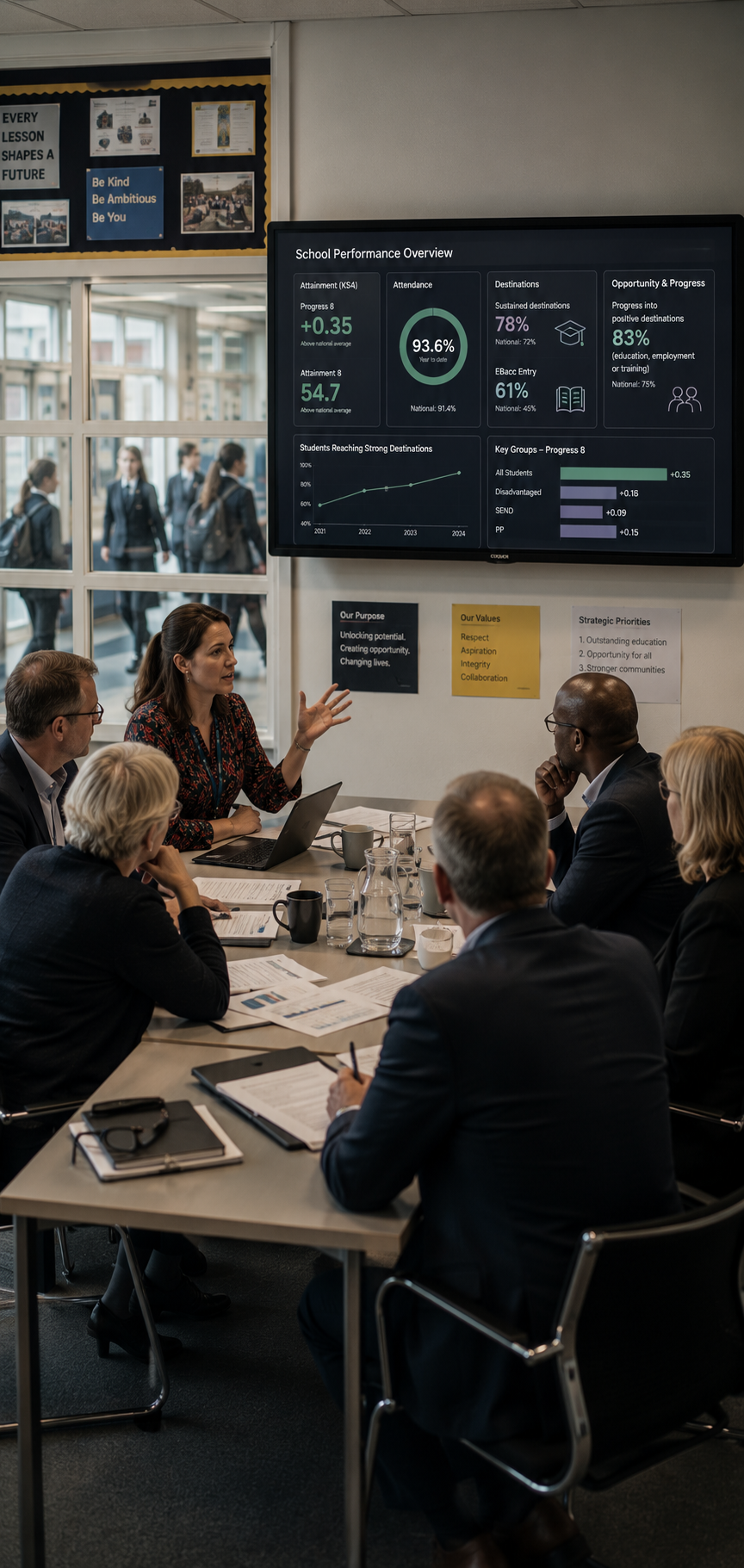
How do we govern not only for the institution we lead today, but for the futures our young people are growing into?
Governing a school or trust has traditionally meant looking inward: performance, finance, safeguarding, curriculum, people and organisational risk.
But many of the forces shaping learners' futures sit outside the institution.
Economic change determines where opportunity is growing. Industry determines the skills and experience it values. Place shapes investment, infrastructure and access. And the circumstances surrounding adult learners influence whether they can reach those opportunities at all.
Future-facing governance brings some of that outside intelligence into the strategic conversation – not to give governors another thing to govern, but to give them a wider lens through which to govern what is already there.
It asks whether boards have enough visibility of the world their learners are moving into – and whether that insight is influencing the questions they ask, the partnerships they prioritise and the decisions they make.
You don’t need another thing for governors to govern. You need a wider lens through which to govern what is already there.
03 Future Facing Governance
INDUSTRY-INFORMED GOVERNANCE: Look outward at the economy.
HOW WE HELP
We bring an industry lens into governance, helping boards understand how economic change, industrial strategy and investment should influence the way they think about their institution's future.
Growth sectors, major infrastructure and investment, technological change, government priorities and emerging workforce needs don't just shape careers provision. They can have implications for curriculum and skills, partnerships, estates and investment, governance capability, organisational priorities and the opportunities an institution chooses to pursue.
We help boards connect those signals to the strategic decisions already in front of them - understanding what is changing, why it matters to their institution and what they might do differently because of it.
This isn't careers governance. It's about making sure the world outside the institution has a meaningful line of sight into the decisions being made inside.
GOVERNANCE FOR OPPORTUNITY: Look outward at the place.
HOW WE HELP
We help boards look beyond the institution to understand the wider ecosystem of people, places and organisations shaping their learners' lives.
Schools and trusts are one part of a much bigger tapestry. Youth hubs and community organisations, libraries and civic assets, health and wellbeing services, employers, voluntary organisations, local government and neighbourhood networks can all influence whether young people feel connected, develop confidence and life skills, access support and ultimately engage with education and opportunity.
Governance for Opportunity helps boards understand that wider ecosystem and consider where strategic relationships beyond the school gates could strengthen the outcomes they are already responsible for.
This isn't about making schools responsible for everything affecting a young person's life. It's about recognising that they don't have to influence those outcomes alone - and asking where stronger relationships with the assets already present in a place could make the institution itself more effective.

Awards

Global Inclusion Lighthouse Award for Employer-Led School Governance
World Economic Forum, 2026
STEM Leadership Award
Women in Science and Engineering, 2025
Inspirational Leader
Education Estates (Department for Education), 2024
Inspiring Change in Education
Fairness, Respect and Inclusion Awards, 2023